
© Lucy Katherine Jarasius 2026
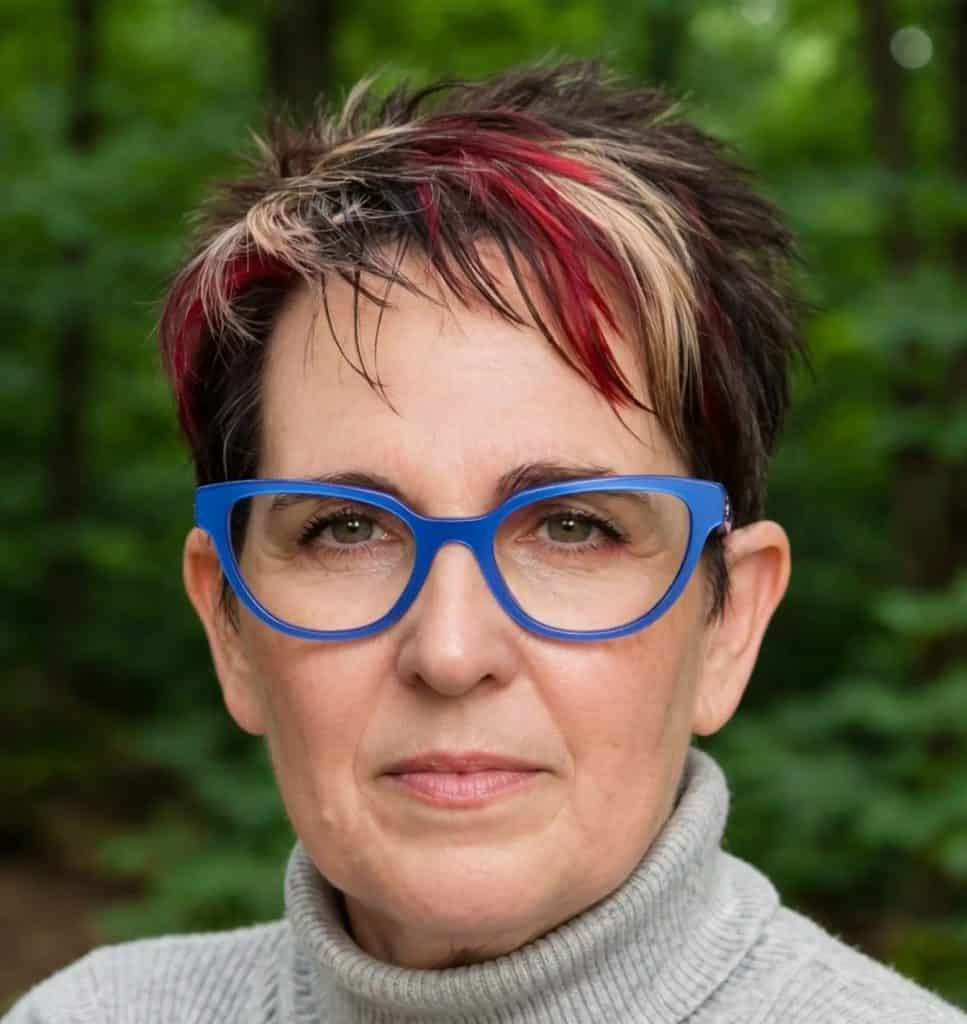
Lucy’s life-long passion for dance-arts, faith-journey, and her love of learning opened opportunities to study, travel and “create”.
Practical and project-based qualifications, including a Graduate Diploma in Applied Social Sciences (Adult Education) and an Advanced Certificate in Creative Ministries equipped her to produce and implement short courses for students of various age, ethnic background, dance/worship expression and faith affiliation.
Dancer, Poet, Ministry Team Leader, Educator, Administrator, Writer,
Lucy’s faith-for -funding approach means that she negotiates remuneration for services rendered. Aside from embodied prayer and worship practice, she understands the importance of worship as a lifestyle and gives generously of her time and experience, often doing unpaid or ad hoc honorarium project work for local, global entities such as:
*International Christian Dance Fellowship Steering Committee (ICDF SC)
*ICDF Diploma Faculty (Tutor)
*ICDF Australia Facilitator of The New Thing (TNT) Hubs
*World Student Christian Federation Asia-Pacific Regional Women’s Committee
(WSCF-AP RWC)
*Australian Student Christian Movement National Executive Committee (ASCM NEC)
*Anabaptist Association of Australia and New Zealand (AAANZ) past National Executive Member
These active pathways for faith and leadership formation catalysed her awareness of the power of multi-generational leadership. Currently, Lucy is particularly enjoying the creation of opportunities and platform for young people (18-35 year olds) to flourish in their creativity and Christian faith.
Years of friendship and collaborative work with Aboriginal Christian friends and community e.g. Scarred Tree Indigenous Ministries, along with fresh insights from trips to Middle Eastern contested spaces, have inspired Lucy to develop poetry, creative works and resources journeying deep into the ongoing story of empowerment for women, marginalised people groups, peace-promotion and the prophetic work of non-violent social justice activism.
All this and part-time paid work in the community services sector has involved and continues to present huge challenges (especially when missing children and grandchildren living far from her current home in Toowoomba, SEQld). However, she’s up for that…
When you can’t walk on water, you either sink or swim!
She finds that Love is and makes the way!
You might find her “chasing z’s” (enjoying some good sleep), stroking the big fluffy feline fur-baby she provides a home for with her husband, Andrew (who also loves cats), surveying her bedside table tower of inspiring books begging to be read or re-read, or maybe on one of her many Zoom video calls/meetings, but you’ll always find her ready for the chance to share a laugh and a happy chat over a good Tea/Coffee with CAKE!
New-Story Creactivism: from the violence of Empire to a Commonwealth of flourishing
As a Member of the WSCF-AP Regional Women’s Committee, my heart is to encourage readers of this article in their Christian Faith and in their social justice activism, particularly in the area of transformational social justice and empowerment for women.
I am a Polish-Hungarian-Scandinavian-Jewish-Australian woman living and flourishing in creactivism on the lands of the Western Wakka Wakka, Giabal, Jarowair and Jagera peoples. Complicated story, right there! I have been aware of the presence of God since early childhood and a confessed radical Jesus-follower since the age of seven years old. I believe that story of faith over a lifetime enabled me to overcome the effects of trauma that trickled down my family history. I certainly was not shielded me from the effects of generational experience involving violence against women. My mother was a holocaust era survivor who experienced personal physical and mental atrocities and complete destruction of communities and way of life during her formative years prior to and during the Second World War. She was Hungarian, born in Romania. Her heritage included Jewish bloodlines. She met my father, a Polish man, in Dachau, Germany soon after the war and then, as a newly-married couple, migrated as Displaced Persons to begin a new life in Australia, a country offering freedom, restoration, and re-invention of their lives… an opportunity to flourish after devastation!
Hence my subsequently being born in Australia, growing up and being educated during the prosperous post-war “baby-boomer” era. Little did my parents know about the development of Australia’s own history fraught with violent, arguably genocidal, government policy and unjust displacement of her own indigenous peoples in the history of rapid expansion as colonies of the British Empire.
Australian researcher, Peter Dockrill, presents research supporting that
From 1788 onwards… indigenous Australia experienced a “depopulation event”, driven primarily by disease exposure, but also by violence – including massacres and other killings – that claimed potentially millions of Indigenous lives.
The trauma of that era’s legacy overshadowed the 20th Century’s gradual evolution of Australia’s independence from direct British rule and continues to provide challenges addressed with a frustratingly slow and interrupted momentum right up until current times. It is interesting to note that Australia is not a fully-fledged republic despite the six self-governing colonies of the British Empire uniting to form the Commonwealth of Australia well over a century ago on the 1st of January, 1901, under the Commonwealth of Australia Constitution Act 1900 passed by the British Parliament.
Neither is Australia free from the ongoing negative effects of the dark doings in her colonial past, despite the shedding of much light on the previously hidden history. Movement towards healing and restorative justice, although visible, has been a very slow saga. The struggle of indigenous peoples here in this nation of many nations is far from close to ending.
But that’s another story!
From the perspective of an early 21st Century Australian woman aware of current issues seriously concerning the female population, the story I tell here, specifically mentions violence against women, abortion, child protection and student protest.
I see:
- Empire as an old-story violent, exploitative model of human progress
- Commonwealth as a new-story expression of collective human development that champions equality, equity and the empowerment of women, creating an environment in which all may flourish, and
- how the Christian faith perspective (life viewed and experienced through a cruciform lens) exposes the former destructive narrative whilst both compelling and propelling us into a better story of life for all!
I agree with the American author, speaker, activist and public theologian, Brian D McLaren, who has visited Australia on several occasions. He discusses in several of his many published writings, including The Secret Message of Jesus, that the traditional Kingdom of God language Jesus used during his time on earth as a human being native to 1st Century Levant lands (Eastern Mediterranean region), cannot easily be understood by 21st century meta-modern people. Particularly, to Jesus-followers alive in contemporary times who have lived to see the crumbling of relatively recent European empiricism and colonial domination. Simultaneously they have seen the rise of current versions of democratic governance and social functionality. To them, the term Kingdom evokes images of a Monarch/Emperor/Caesar system, in direct contrast to the subversive, counter-cultural, power-inverting way of life Jesus taught and lived. For this discussion, I suggest the alternative metaphor, Commonwealth of God. The concept of wealth included in the word Commonwealth is a holistic, achievable vision of shared know-how and sustainably managed resources of both material and immaterial kinds nurtured in a community dynamic respectful of diverse contribution and mutual support. It does not refer to mere accumulation of material assets limited to commercial systems defining human interaction as a relationship between producers and consumers. It includes the care for those suffering ill health, the enablement of those less able (or differently able) to contribute to the whole. It works to empower the weak and operates with an attitude of rehabilitation towards those who cause harm. Punishment and retribution give way to restoration initiatives in situations demanding the dispensation of justice whilst ensuring safety of the public.
Where old empires sought cooperation and unity through coercive homogenisation. This approach was not designed to achieve peace and flourishing for all. Both metamodern frameworks and the actualisation of the Commonwealth of God pursue harmony through respect for human life and the natural environment while celebrating glorious diversity. Such a cruciform/Jesus vision of Commonwealth is framed not as a top-down political force, an equation of the flourishing-of-the-few at the expense-of-the-many, but as an organic, interior-and-exterior reality that equalises and equitises and transforms systems from within.
Metamodern co-development reflects this ethic – rejecting extractive dominance in favour of a holistic, multi-layered stewardship that honours both individual agency and collective well-being. This commitment to dismantling extractive models of human endeavour is directly visible in empowerment of women and grassroots activism against violence towards them. This kind of vision is extends in application to other marginalised and or persecuted members of society such as indigenous peoples and those discriminated against on the basis of gender identity.
Imperial systems historically endorsed public and domestic demeaning of women, relying on coercive control, subjugation, and the diminishment of an individual’s autonomy in the interests of serving a dominant elite. In contrast, feminist and anti-violence activism embodies metamodern and Commonwealth of God principles by replacing hierarchical domination with relational safety and self-determination mechanisms.
Rejection of imperial exploitation through Christ-imitating anti-violence practices, dismantles the patriarchal belief that one person can possess or control another. Empowerment propelled by the new-story narrative, restores equal voice and dignity to those who were under old-story paradigms perpetuating marginalisation and disenfranchisement.
Grassroots advocacy does not rely on distant, coercive power. It works organically at the intersection of personal healing (interior transformation) and structural reform (exterior protection), building community-led safety networks that heal systemic harm at the root.
Ultimately, elevating women’s agency and confronting public and domestic abuse are essential expressions of positive progress, proving that genuine peace and unity cannot exist through forced compliance, but through the safety, liberation, and active participation of every person.
In an era defined by hyper-visibility and instant global communication, our public discourse often suffers from an ironic form of blindness. We possess unprecedented platforms to broadcast our perspectives, yet genuinely curious attention remains scarce. As Glenda Mitchell, a South-African Australian Life and Leadership Coach, observes, “We can make ourselves visible in ways that previous generations could never have imagined… Ultimately, being seen depends on someone else choosing to give us their attention.”
For women engaged in social justice, this reality poses a profound ethical question: if we demand that systemic injustices be seen and addressed, are we willing to pay the costly price of attentive, active engagement ourselves?
I invite readers of this article to seriously consider that transformational restorative justice requires shedding light on hidden issues so that we can see them more clearly and move beyond passive observation into courageous responsibility that the Commonwealth of God both requires and nurtures. The urgency of this imperative becomes painfully clear when examining the kind of crises within Australia’s own communities. In my observation, the issues seem largely lacking attention in many spaces of general Christian conversation and active concern.
Before providing examples of such crises, I will mention a little more about clearer vision and evocative images.
Lady Justice is an image of the moral force in judicial systems. She is depicted with a set of scales and sometimes a sword. This image was introduced during the time period of the Roman Empire. However, apparently, she was seen as more of an artistic symbol than a goddess in the traditional religious sense. The concept of scales of justice was evident in Babylonian, Egyptian, Greek and Roman civilisations, all known for empirical expansion ideals, territorial acquisition through violent military means and subjugation of conquered peoples. We see the Lady Justice imagery used in symbolic artworks (e.g. sculptures and illustrative heraldry and logos) identifying legal and government agencies throughout the world today. Interestingly, the addition of a blindfold to the Lady Justice image only came about in the 16th Century, and if used these days, represents impartiality rather than the original satirical purpose of suggesting blindness to previous injustices!
Lady Wisdom in the Old Testament Book of Proverbs personifies wisdom as a noble woman who calls out in public spaces to offer guidance, wealth, and life. She is described as present with God before the universe was made, rejoicing as God set the foundations of the earth.
Although God, in Judaism, is described as Spirit and assigned no particular gender, the Hebrew word for wisdom, hokmah, is grammatically feminine, which naturally led writers to use female pronouns and traits.
The New Testament shifts the focus from literary personification to a real person.
The Apostle Paul writes in 1 Corinthians 1:30 that Jesus has become wisdom from God for believers. To early Christians, there was a connection between Lady Wisdom’s role at creation and Jesus, who is described in the Gospel of John Chapter 1 as the divine Logos (Word) through whom all things were made!
The Shekinah is a Hebrew term for God’s manifest presence on earth, which uses a grammatically feminine word depicting God’s glory. This feminine form, similar to the feminine term for wisdom, describes God’s general presence, although a strict gender identity is not intended.
Jesus personified and glorified in the great prayer recorded in the Gospel of John Chapter 17, describes his amazing, verbalised vision for humanity, before he went through the ordeal of betrayal, arrest, trial and crucifixion. Jesus was male, born of a woman who divinely conceived him, as we are told in the Gospel of Luke Chapter 1:26-38.
In John Chapter 17, Jesus prays for himself (verses 1–5), asking to be glorified by God, upon the completion of the mission on earth at that time, and to return to the divine glory shared before the creation of the world.
He prays for his followers (verses 6–19), asking God to protect and keep the disciples being left behind in a hostile world and praying that they stay unified and holy.
He also prays for future followers (verses 20–26) including everyone who would ever believe through the disciples’ message – including all Christians today – and for complete unity among them so the world may know God’s LOVE.
Hence, in comparing Lady Justice, Lady Wisdom and Jesus, we see a great contrast between the ways of Empire and the ways of the Commonwealth of God.
My discussion now moves on further – beyond passive observation into the realms of courageous responsibility and the kind of activism into which the above-mentioned comparison calls us… especially in relation to particular crises tearing at the fabric of contemporary Australian society and to which a large sector of the Christian church seems blind and about which, it appears to be mute.
Justice cannot exist without a willingness to confront uncomfortable truths.
Let’s look at some examples and effects of violence perpetrated upon women and children in the Australian and global contexts.
According to the Australian Bureau of Statistics, in a national population of almost 28 million people, police recorded 97,800 family and domestic violence (FDV) offenders in the 2024–25 financial year, representing an 8% increase from the previous year.
Police-Recorded Offenders and Rates
- Offender Rate: Reached a high of 403 offenders per 100,000 people, the largest annual increase since national reporting began in 2019–20.
- Gender Breakdown: More than three-quarters (78%) of recorded FDV offenders were male.
- Homicides: nearly a third (31% or 133 victims) of all homicides in 2025 were family and domestic violence related.
Police-Recorded Offenders and Rates
- Offender Rate: Reached a high of 403 offenders per 100,000 people, the largest annual increase since national reporting began in 2019–20.
- Gender Breakdown: More than three-quarters (78%) of recorded FDV offenders were male.
- Homicides: nearly a third (31% or 133 victims) of all homicides in 2025 were family and domestic violence related.
In a context of violence against women, child sexual exploitation also proliferates. It appears that most Australian do not realise that how close sexual exploitation is to home. Research provides the evidence and underscores the scale of this crisis:
- Over 1 million children worldwide are exploited by commercial sexual abuse, with 59% of trafficked children originating from the Asia Pacific region.
- Global sex trafficking generates $99 billion annually, averaging roughly $11 million every hour.
- Domestically, a University of NSW report reveals that 15.1% of Australian men report sexual feelings toward children, and 9.4% admit to offending, meaning nearly 1 in 5 Australian men report child-directed sexual feelings, offending, or both.
- Australia accounts for 31% of foreign visitors prosecuted in Thailand for child sexual offences – the largest single national demographic.
In Australia, National Child Protection Week 6-12 September 2026, provided an opportunity to reflect on child safety and what the latest data shows about the experiences of children and families who call Australia home. The Australian Institute of Health and Welfare
(AIHW) recently released its Child Protection Australia 2024-25 report, providing a snapshot of children who came into contact with Australia’s child protection system and the supports provided. The data reveals that:
- During 2024–25, that of the approximately 137,000 children involved, nearly 1 in every 42 children came into contact with the child protection system.
- Around 37,900 children were the subject of substantiated maltreatment, meaning an investigation concluded they were being, or were at risk of being, maltreated.
- The rate of children in out-of-home care in regional and remote communities were around twice as high as those in as in major cities.
- Rates ranged from 10-15 children per 1,000 across regional and remote areas, compared with 5.1 per 1,000 in major cities.
Behind every statistic is a child, a family and a unique set of circumstances. Importantly, child protection is not only about responding once harm has occurred. The AIHW data also highlights the role of intensive family support services, which work with families to strengthen parenting capacity, prevent children being separated from their parents and support reunification where separation has occurred.
Looking specifically at the major child protection, family counselling, and early intervention programs funded by state and federal governments statistics reveal how heavily integrated faith-based entities are in this specific space.
For example, when it comes to formal child protection, specifically intensive family support services and out-of-home care (foster/residential care), state governments (such as the NSW Department of Communities and Justice and the Queensland Department of Child Safety) fund external non-profit partners to manage the case delivery.
State-by-state tender lists demonstrate that major faith-based agencies such as Anglicare, UnitingCare, Centacare (Catholic Care), MacKillop Family Services, and the Salvation Army hold a generous portion of out-of-home care and foster care support contracts nationwide.
Abortion is a very sensitive personal issue for women’s health and a volatile subject of contention for religious, political and public debate and for government policy-making. Without getting into complex, comprehensive discussion, for the purposes of this article, I will limit my presentation to some statistical reporting arising from the Australian context:
Non-Medical (Elective and Psychosocial) Reasons
The large majority of early-term procedures are non-medical/elective, driven by socioeconomic, personal, or broader psychosocial factors documented by research groups like the Australian Longitudinal Study on Women’s Health:
- Unintended Pregnancy: Changes in life circumstances, financial insecurity, or lack of readiness.
- Psychosocial Factors: Relationship instability, domestic or family violence, and lack of social support.
Medical Reasons
Abortions performed strictly for medical reasons represent a small percentage overall and are heavily concentrated in specific situations:
- Fetal Anomalies: Severe or fatal genetic/structural abnormalities diagnosed during pregnancy.
- Maternal Health Risks: Acute physical health conditions where continuing the pregnancy endangers the life or physical health of the pregnant person. These are more common considerations in later-term (third trimester) procedures, which remain statistically rare and tightly regulated by clinical guidelines.
University students in Australia have protested on related women’s health and well-being issues.
In August 2026, secondary school and tertiary students marched to the New South Wales Parliament. They joined broader national “No More” campaigns against gender-based violence.
The protest followed studies showing alarming rates of abuse among students, including an April 2025 study revealing that 45% of female international students in relationships experienced intimate partner violence.
Generally, trends appearing in the younger demographic of Australians show that university-aged students lean heavily pro-choice. Christian students who hold anti-abortion views more frequently organize through non-university entities like the Australian Christian Lobby or local parish youth groups rather than official university protests.
Because young Christian adults are highly exposed to national conversations about gender-based safety (via social media and secular universities), they are the demographic most actively pushing for reform. When Christian university students engage in domestic violence activism, they are highly visible in faith-based social justice organisations like Common Grace, which runs the Safer Resource an initiative designed to directly dismantle the misuse of Scripture by abusers, to train older clergy on appropriate Domestic and Family Violence (DFV) responses and to educate churches on eliminating domestic abuse.
Addressing such deep-seated societal issues requires evaluating how institutions respond and how institutional interventions operate. Research tracking attitudes towards DFV within faith communities highlights a critical friction point regarding conservative theology and modern awareness.
A landmark study from the Australian National University (ANU) found a distinct statistical correlation: individuals with high religious involvement are significantly less likely to acknowledge domestic violence as an issue within their own faith communities! The data shows that high frequencies of prayer and church attendance are heavily associated with patriarchal gender beliefs.
While 90% of clergy and church leaders acknowledge domestic violence is a massive national crisis, only about 60% believe it happens at the same rate inside their own churches. For example, this directly conflicts with the Anglican Church’s internal data showing that prevalence rates within the pews are equal to or higher than the secular public.
The Lutheran Church, also, has published material regarding its engagement with the subject of Domestic Violence.
Sometimes, well-intentioned systems often create unexpected points of failure. Systems designed to help communities can unintentionally weaken them. Financial donors can become frustrated, health practitioners burn out, and communities themselves can become trapped in cycles of dependence.
To counter this cycle of learned helplessness, models developed by innovators like Australian researcher and activist, Andre Van Eymeren PhD, (formerly of the Social Flourishing Institute) advocate for an Asset-Based Community Development model:
- Capacity over Deficit: Rather than evaluating communities solely by their deficiencies, interventions must focus on preexisting strengths, relationships, local wisdom, and inherent resilience.
- Structural Collaboration: Systems must move away from fragmented, transactional aid toward cross-sectoral partnerships that uphold human dignity.
- Shared Agency: Individuals flourish when treated as co-creators of their community’s future rather than passive recipients of welfare.
This practical framework aligns with the call articulated by Roma Waterman, an Australian creative artist and educator, through her Heartsong Prophetic Alliance initiative: Do not simply speak. Build. Do not merely announce possibilities… Partner in bringing it into being.
Sustainable transformation demands that practitioners step out of the audience and into the slow, rigorous work of structural repair.
Rebuilding damaged social structures requires a radical shift in how we conceptualise conflict, community, and change. In deeply divided societies, public discourse frequently devolves into ideological warfare. With permission from my husband, Andrew Park, himself a prophetic voice for egalitarianism, and a social justice activist, I quote something he wrote in an unpublished paper:
There is a moment in every deeply polarised culture when people begin to mistake their internal temperature for reality. Anger feels like clarity. Certainty feels like faithfulness… It is precisely into that atmosphere that the language of Shalom refuses to behave. Because Shalom is not the absence of tension… [It is] a reordering of social imagination at precisely the point where imagination has collapsed into tribal reflex.
To move beyond reactionary tribalism, strategist Alan Hirsch, South African-Australian incarnational missiologist, points to the New Testament concept of metanoia – traditionally translated as repentance, but fundamentally meaning a systemic renovation of the mind. Hirsch explains that true transformation requires breaking free from small, self-referential paradigms to reframe how we view our neighbours and our collective mission.
Implementing metanoia in community engagement follows a four-stage process:
- Unravel: Identify and bridge the gap between professed values and actual practice.
- Uncover: Expose systemic blockages and underlying patterns without resorting to personal attack or polarization.
- Unlock: Replace defensive postures with curiosity, mapping out new avenues for structural change.
- Understand: Formulate collaborative, actionable plans built on shared clarity and purpose.
I continue in his vein, with like-minded encouragement, to consider that at the heart of all social justice initiatives lies an unyielding commitment to human worth and the adoption of new-story, constructive narratives. Authors such as the aforementioned Brian D McLaren with one of his colleagues, Irish activist, Gareth Higgins, remind us that structural models must remain anchored in the intrinsic dignity of every individual. They co-authored a book six main narratives by which the world of humanity commonly lives. Called The Seventh Story: Us, Them, and the end of violence, in this volume, Higgins and McLaren contend that:
Currently, six primary stories shape our lives as individuals and as societies. They give our lives meaning, direction, and drive, even though many of us have never given them a name. As soon as we name them – domination, revolution, purification, isolation, victimization, accumulation – we start to notice something: these stories do not work.
Instead, they drive us apart, create more suffering, and fail to answer the question of how to make a better world. The sun is setting on our old stories.
But there is a Seventh Story, misunderstood and hidden, but available to everyone … a story that upends what we think we know about religion, politics, economics, art, and even storytelling itself.
There is a Seventh Story, a path of openheartedness toward others, and that we should look anew at the world and your neighbours in creating it. Facing fear, aggression, and violence with the strength to love, we can change our stories.
Furthermore, with a view to educate next generations, there is a children’s publication available! Cory and the Seventh Story makes these lofty ideals accessible to the world of children with the aim of encouraging them to grow up resilient.
Brian D McLaren’s and Gareth Higgins’ reflections help us clarify the difference between narratives that make human flourishing minimal or impossible and those that maximise and make it possible. Those two authors encourage us to look more closely and carefully at the stories we tell about ourselves, others and our world.
These foundational truths apply to all stages of human life. As Peter Downie, Australian commentator, writes, “before any of us took our first breath, we were already known and loved by God.”
The defence of the vulnerable encompasses the entire continuum of human existence. Women, children, men, in fact, all people, no matter gender identity or geographic location, deserve to live in peace and shared prosperity as intended in God’s design from the time of creation. Old-story Empire polity is continuing to be discredited and dismantled as the New-story Commonwealth of God modelled on the way of Jesus emerges. No matter how dark things appear, they are brought to light in which people can choose to walk.
Justice cannot be reduced to public rhetoric or passive concern. It demands a deliberate choice to see the vulnerable, a willingness to dismantle institutional dependency, and a commitment to building frameworks founded on hope and love.
Protest amplifies voices that have been ignored and/or muted.
When realities are embraced, creating pathways for empowerment towards transformation is necessary and truly possible.
Along with statistics about serious situations affecting women’s well-being in the Australian context, I have shared some activist wisdom from the writings of inspiring Christian authors resident in Australia and abroad. I trust and pray that Jesus-followers anywhere and everywhere are encouraged to pay attention and be creactive (creative, and active, not merely reactive) in reflecting God’s love so that we can be the change and bring about the kind of future that glorious light through cruciform lens makes possible for us to see!