
What does it mean to wait and who is asked to wait?
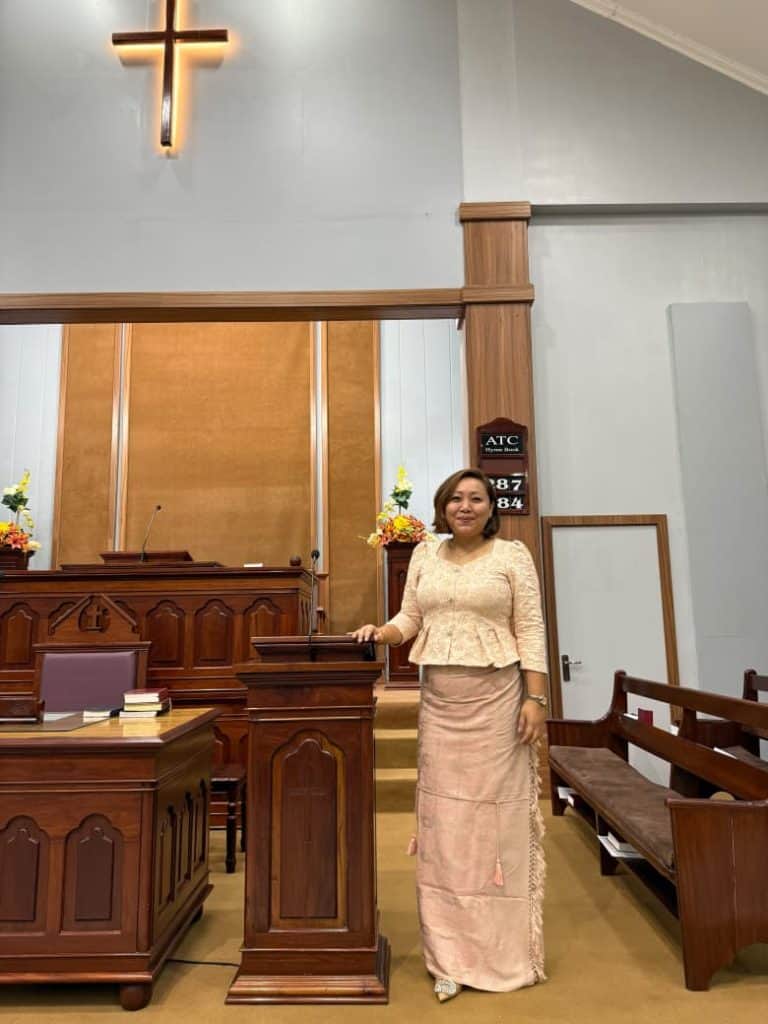
In her reflection, “Is Waiting Political?” Regional Women’s Committee member Manjulie Vaiphei from SCM India invites us to look again at something that often seems ordinary: waiting. Through the stories of women in the Bible and reflections on women’s political participation, the Church, and the voices of young people today, Manjulie asks us to consider how waiting can be shaped by power, privilege, and injustice.
Her reflection challenges us to distinguish between waiting in faith and being made to wait by systems and institutions. It invites us to ask whose voices are heard, whose futures are postponed, and when patience can no longer be an excuse for delaying justice.
We invite you to read Manjulie’s reflection and join her in asking a question that remains deeply relevant for our churches, communities, and movements: When does waiting stop being faith and start becoming acceptance of injustice?
IS WAITING POLITICAL?
“Wait” is one of those words we use every day. We wait at hospitals, for buses, outside government offices, and sometimes at protest sites. We wait because there is often nothing else we can do. For women, waiting has often been more than simply passing time. Women are told to wait for many things: wait until you are older, wait until your family agrees, wait until the church is ready, wait until the right time, wait until someone in authority says yes.
So, I began to wonder: Is waiting really just waiting? Or can it also be political?
The Bible is full of women who waited. But their stories are not all stories of patient women quietly accepting their situation. Many were waiting because somebody else had the power to decide their future.
Hagar waited in the wilderness after she was used, sent away and left there (Gen. 16; 21). She had little control over what happened to her. Yet God saw her when others did not. Jephthah’s daughter waited and grieved for a life she would never live because of a promise made by her father (Judge 11). She paid the price for a decision she did not make. Rizpah waited for Justice by refusing to leave the place where injustice had happened (2 Sam. 21:1–14). She stays there, making it difficult for those in power to simply forget what happened. The Syrophoenician woman did something different. She refused to wait for permission. She is a woman, a foreigner and a Gentile, yet she spoke back to Jesus and kept asking (Mark 7:24–30). The woman who had been crippled over for eighteen years had waited long enough (Luke 13:10–17). Jesus did not wait for institutional approval and healed her even when religious authorities objected. And the widow in Jesus’ parable kept going back to the judge because she wanted justice (Luke 18:1–8). She did not disappear simply because the system told her to keep waiting.
These women lived in different times, cultures and circumstances. Yet there is something that connects their stories: someone else had the power to decide what happened to them. That is where waiting becomes political. These women remind us that waiting is never only about time. It is about whose future is allowed to begin. It is about who held the power to decide when, or even if, they would be seen, heard, or treated with dignity. The problem is not about waiting in itself but about who is always expected to wait. Who gets to wait, who gets to decide the duration of the waiting, and who bears the cost of it. People with power can afford to say “Not yet” but people without power usually cannot afford that luxury.
India’s experience with women’s political representation makes this very clear. In 2023, Parliament passed the Constitution (106th Amendment), popularly known as the Women’s Reservation Act or Nari Shakti Vandan Adhiniyam. It provides for one-third reservation for women in the Lok Sabha and State Legislative Assemblies but it will be implemented only after a census and delimitation (the process of redrawing constituencies) happens which only God knows when. For women who have spent decades organising, campaigning and demanding a stronger political voice, “wait” sounds painfully familiar.
And this raises a simple question: Why is women’s political participation always something that can be postponed? Women already participate in public life. They vote, they organise communities, they care for families, they run farms and businesses. They participate in movements and protests. They keep institutions, churches and communities going. Yet when it comes to deciding who makes the rules, women are still often expected to wait.
And even saying “women” is not enough. Which women are we talking about? India is a society profoundly shaped by caste, ethnicity, religion, class, region and language. The experience of a Dalit woman is not the same as that of an “upper-caste” woman. A tribal or Adivasi woman may face problems that an urban woman does not. A woman from Northeast India may have a very different experience from a woman in Delhi. Muslim women, women from conflict areas, minority communities, poor households and women with disabilities may face barriers that are easily missed when we speak about “women” as though they are one group. So simply putting more women into Parliament does not automatically solve everything. We also have to ask which women get heard and which women remain invisible.
This matters for the Church too. Across many churches, women do much of the work. They organise programmes, teach children, care for communities, raise funds, visit people, lead women’s groups and keep ministries running. But when it comes to important decisions and positions of authority, the response can suddenly become: “Not yet.” Wait until the church is ready. Wait until the tradition changes. Wait until the community accepts it. We often pray for justice outside the Church while reproducing the same unfairness inside it. We talk about equality before God but sometimes hesitate when women ask for an equal say. We praise women for their work but become uncomfortable when they ask for authority. There is something terribly wrong when a woman is considered good enough to carry responsibility but not good enough to share power and have equal say.
Young people are asking similar questions today. Across India, young people have been taking to the streets and demanding answers from institutions that they believe are failing them. Their demands may be different from women’s movements, but the frustration is familiar. Recent student-led and youth-led mobilisations particularly Gen Z reveal a generation unwilling to accept delayed accountability. They are questioning institutions that demand patience instead of accountability. Their courage should unsettle the church as much as it unsettles the state. At some point, people begin asking whether “wait” is actually a way of avoiding responsibility.
This is also where faith becomes important. Christians often talk about waiting and we know that waiting has spiritual meaning. We wait in faith, we wait in hope, we wait for God. There is nothing wrong with that kind of waiting. But there is a difference between waiting for God and being made to wait by people or systems that have the power to change our situation.
The story of Abraham, Sarah and Hagar makes this complicated (Gen. 16-21). Abraham and Sarah waited for a child because they believe in God’s promise. Abraham and Sarah wait for the fulfilment of God’s promise, but Sarah experiences the pain and pressure of that waiting, while Hagar’s body becomes part of a solution to a problem created by that waiting. So, we should be careful about telling people, especially women, to simply “wait.” Sometimes wait sounds spiritual because we do not want to confront the reason someone has been waiting in the first place.
Hannah also waited for a child. But her waiting is accompanied by humiliation, social pressure and misunderstanding. She goes to the sanctuary and speaks her pain directly to God (1 Sam.1-2). Her waiting becomes prayer, lament, protest and eventually prophetic speech. It is a demand that her condition be seen. And when God answers, she speaks of a God who brings down the powerful and lifts up the lowly. Waiting can become political when the person waiting finds a voice and names the structures that make her wait.
The ten bridesmaids in Matthew 25 were also waiting. All ten women wait for the bridegroom. Jesus presents their waiting differently: they are expected to be prepared. The bridesmaids therefore help us to distinguish prepared waiting from politically imposed waiting. But even here: Why are these women’s lives organised and their social role defined around waiting for someone else’s arrival? The question is not whether waiting is always bad. It is whether women are constantly expected to organise their lives around somebody else’s decision, permission or arrival.
Then there is the woman who had suffered from bleeding for twelve years (Mark 5:25–34). She could have continued waiting. Instead, she reaches out. Her condition carries social and religious consequences because of the purity system surrounding menstruation and bodily bleeding. She has every reason to remain invisible. Instead, she acts and Jesus stops and publicly recognises her. The woman moves from waiting to acting and to being recognised. Her faith is not demonstrated by enduring another twelve years but by refusing to let another twelve years happen.
Faith is not always sitting quietly and waiting for something to happen. Sometimes faith means saying, “This cannot continue.” That distinction matters. So perhaps the better questions are not simply, “Should we wait?” or “Is waiting good?” We should ask: Who is waiting? Who has made them wait? Who benefits from the delay? Who pays the price? And perhaps the hardest question is – When does patience stop being faith and start becoming acceptance of injustice? We should not use God’s timing as an excuse for human beings to postpone justice. If our faith comforts people who are suffering but never asks why they are suffering, something is missing. If our churches celebrate women’s service but keep women away from decision-making, something is wrong.
If we speak about God’s justice but are more concerned about keeping institutional peace, we need to ask what kind of peace are we protecting. Waiting becomes political when some people have the power to make others wait. Perhaps this is why the stories of biblical women still matter. They remind us that people who are told to wait do not always have to remain silent. And perhaps this is also why young people questioning institutions today give us hope. They are asking questions that cannot easily be answered with “wait.” Women are asking the same thing in their own way by refusing to disappear from public life despite centuries of exclusion. They are envisioning and reimagining a just-society. Perhaps this is what gives us hope.
Manjulie Vaiphei