 23 June 2026
As part of its ongoing Movement Building initiative, WSCF Asia-Pacific continues to accompany Student Christian Movements across the region through dialogue, mutual learning, and regional solidarity. These conversations strengthen leadership, deepen ecumenical relationships, and encourage student movements to respond faithfully to the realities of their local contexts.
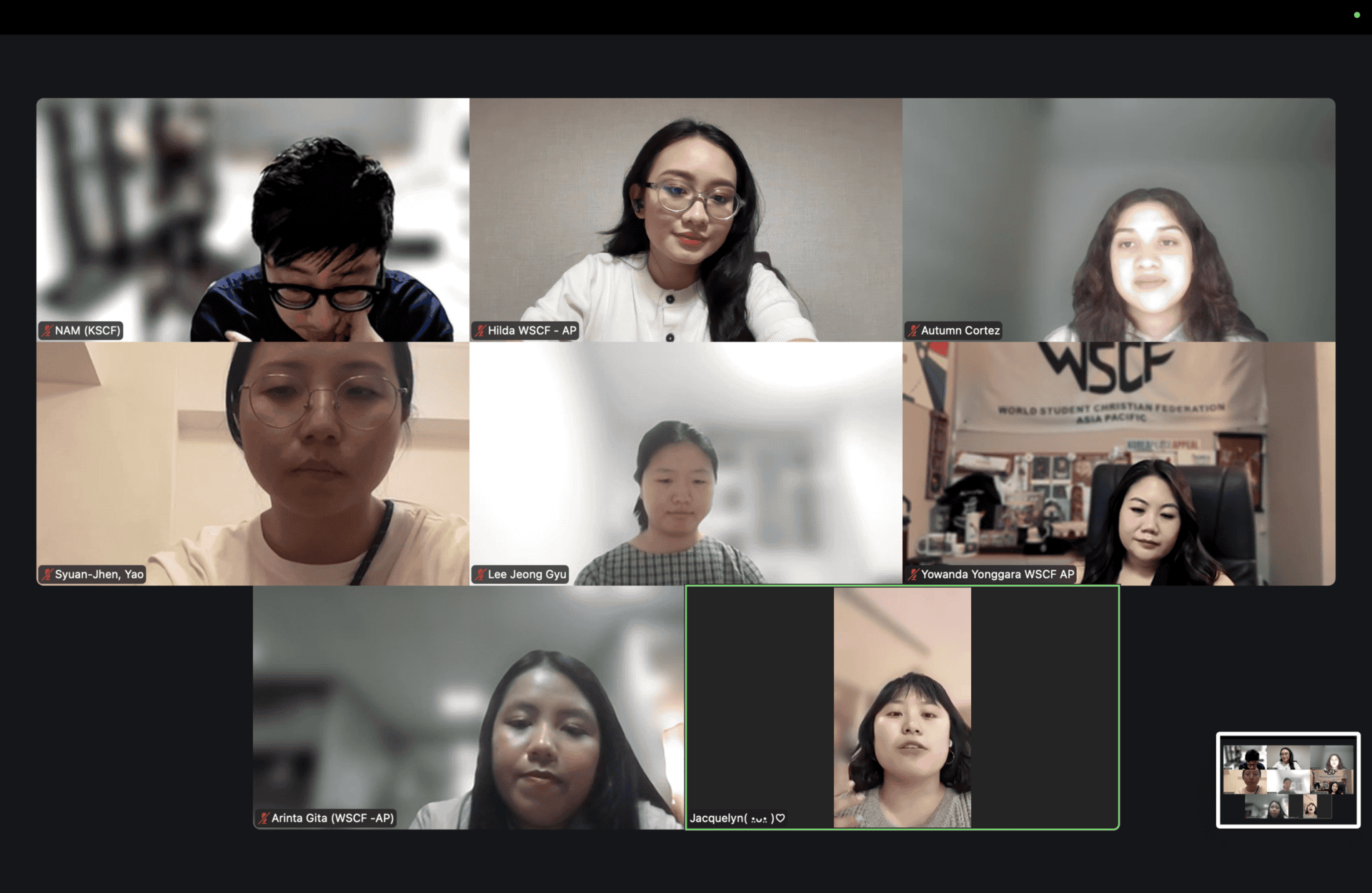
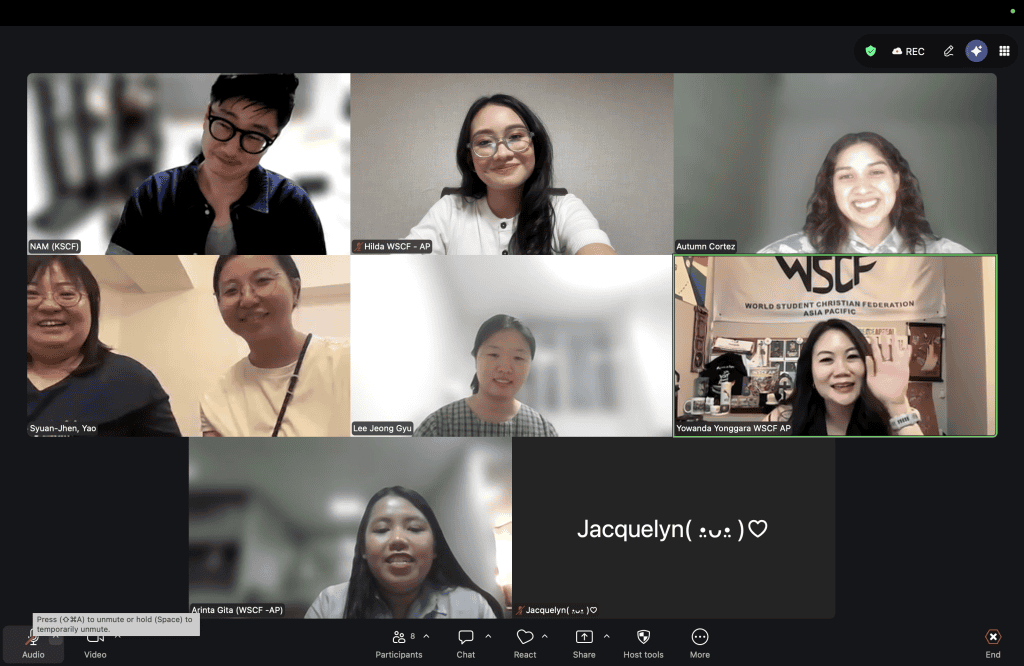
Regional Program Secretary and Movement Building Coordinator Anastasia Hilda, together with Yowanda Yonggara (Regional Executive) and Arinta Gita (Regional Finance and Administration Officer), recently met with representatives of Taiwan SCM, including Rev. Syuan-Jhen, Yao, Rev. Hsieh Hui-Chuan (Programme Secretary of the PCT) and Jacquelyn (Student Representative Campus Ministry Committee of the PCT & WSCF AP ExCo), to learn more about the movement’s ministry and explore opportunities for future collaboration within the WSCF fellowship.
Supported by the Presbyterian Church in Taiwan (PCT), Taiwan SCM continues to accompany students through a nationwide network of regional student centers and campus fellowships. Rooted in a long history of student ministry, the movement provides spaces where young people gather for worship, Bible study, leadership formation, and theological reflection while strengthening their commitment to Christian witness in society.
A central feature of Taiwan SCM’s ministry is its annual formation cycle, which includes Bible Study Camp, Taiwan SCM Camp, retreats, and leadership skills training. Rather than focusing solely on knowledge, these programs intentionally equip students to become movement builders. Through practical planning exercises, participants develop workshops and community initiatives, receive mentoring from pastors and staff, and implement their ideas within their own campuses and local communities.
The conversation also explored the rapidly changing realities facing young people in Taiwan. Participants reflected on the growing influence of misinformation and digital media, particularly during election periods, and emphasized the importance of strengthening media literacy so students can think critically and discern information responsibly. Taiwan SCM also shared its concern for students’ emotional well-being, especially the cultural expectations surrounding masculinity that often discourage young men from expressing vulnerability. By creating safe spaces for dialogue and reflection, the movement seeks to promote healthier understandings of gender, equality, and human dignity.
Environmental justice also remains an important area of engagement. As Taiwan continues its transition toward renewable energy, Taiwan SCM encourages students to reflect critically on both the urgency of ecological responsibility and the social impacts experienced by local communities. Through Bible study and contextual theological reflection, students are invited to consider how faith calls them to care for creation while standing alongside communities affected by environmental change.
Throughout the discussion, Taiwan SCM reaffirmed its commitment to nurturing young people who are able to connect faith with public life through critical thinking, compassionate leadership, and active participation in society. Rather than encouraging partisan positions, the movement equips students to engage contemporary issues through theological reflection, dialogue, and faithful discernment.
The meeting concluded with a shared commitment to strengthen collaboration between Taiwan SCM and WSCF Asia-Pacific through leadership development, regional engagement, and continued opportunities for mutual learning.
Through Movement Building, WSCF Asia-Pacific continues to accompany Student Christian Movements as they cultivate communities where faith inspires critical reflection, courageous leadership, and a shared commitment to justice, peace, and the flourishing of all creation.