19 June 2026 part of its ongoing Movement Building initiative, WSCF Asia-Pacific continues to accompany Student Christian Movements across the region through dialogue, mutual learning, and regional solidarity. These conversations strengthen organizational capacity while creating space to reflect on how student movements faithfully respond to the realities of their local contexts.
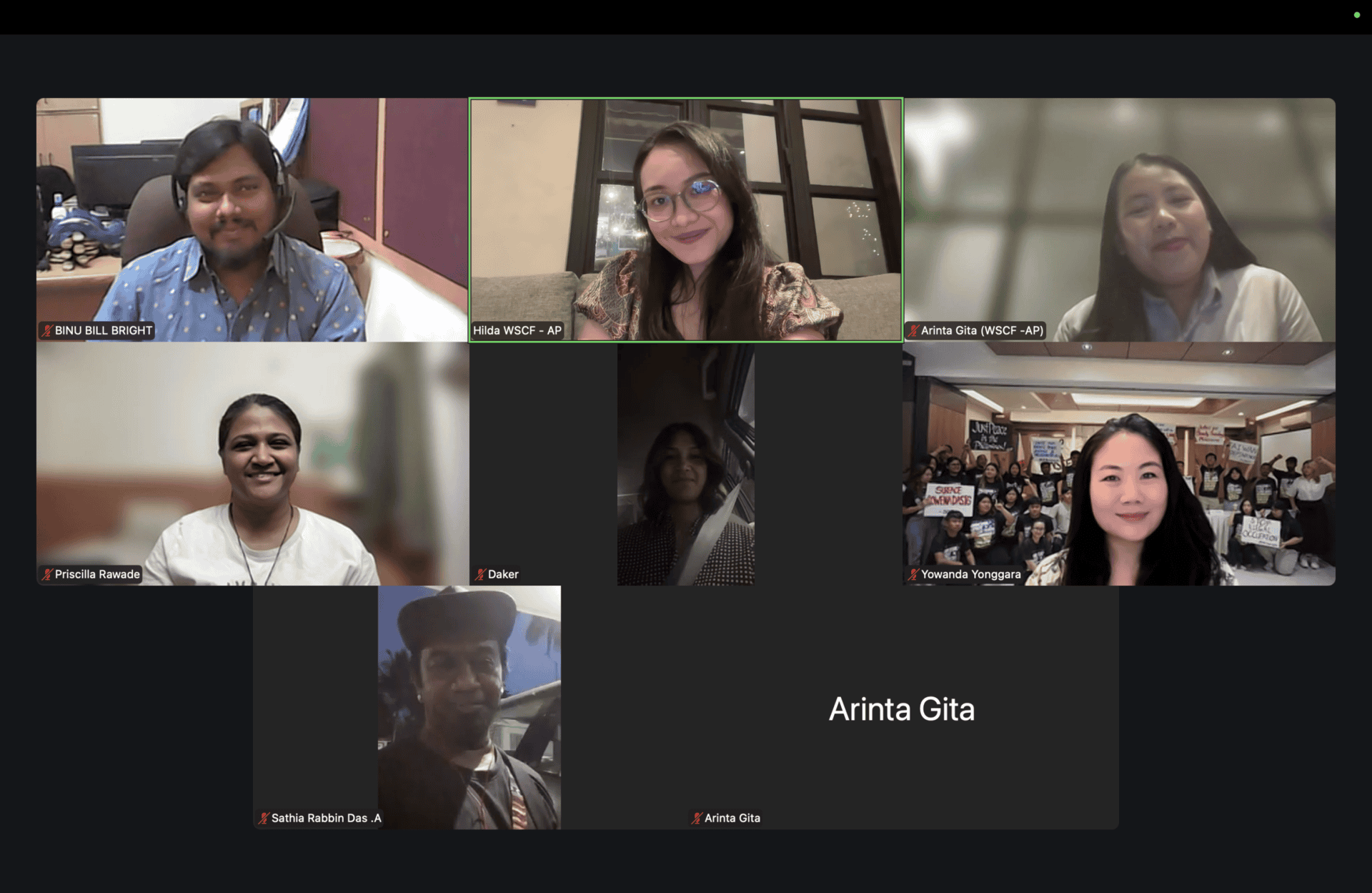
On 19 June 2026, Program Secretary and Movement Building Coordinator Anastasia Hilda, together with Yowanda Yonggara (Regional Executive) and Arinta Gita (Finance and Administration Officer), met online with representatives of the Student Christian Movement of India (SCMI). The SCMI delegation included Dakerlin (General Secretary), along with Vilhu, Binubil Bright, Priscilla, and Satya Rabindaz, each representing key program areas of the movement.
The conversation highlighted SCMI’s holistic approach to student ministry, where faith formation is inseparable from social transformation. Through its Human Rights, Faith Formation and Praxis, Mission and Scholarship, and Gender and Social Justice Desks, SCMI accompanies students as they engage with some of India’s most pressing realities, including caste-based discrimination, gender inequality, religious freedom, environmental justice, mental health, migration, and educational access.
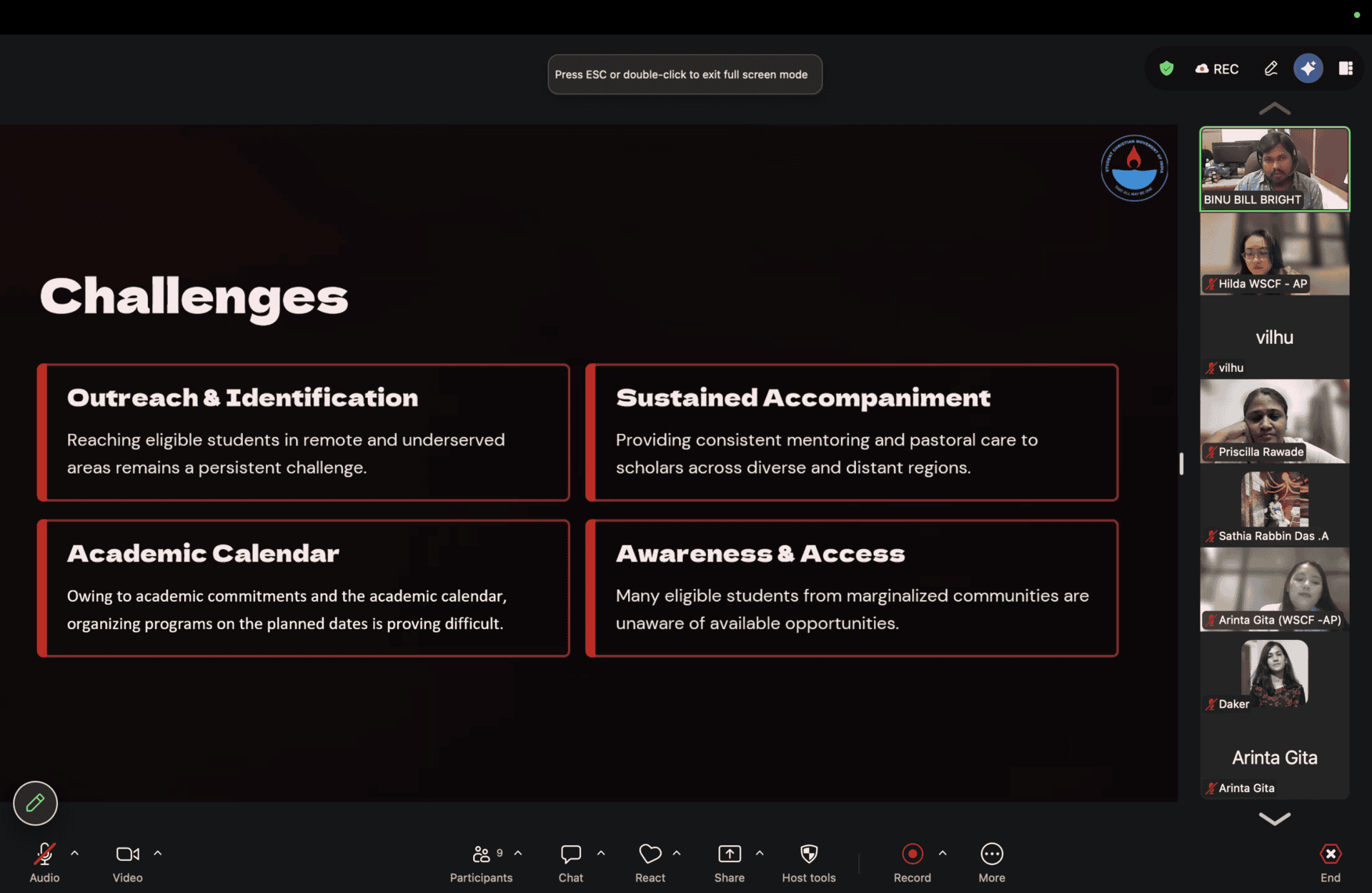
A recurring theme throughout the discussion was the importance of contextualizing ministry. SCMI emphasized that remaining relevant requires listening closely to students’ lived experiences rather than applying the same approach across every region. Whether responding to caste discrimination, drug abuse, or barriers to education, programs are designed around the concerns identified by students themselves, enabling young people to become active participants in shaping their own communities.
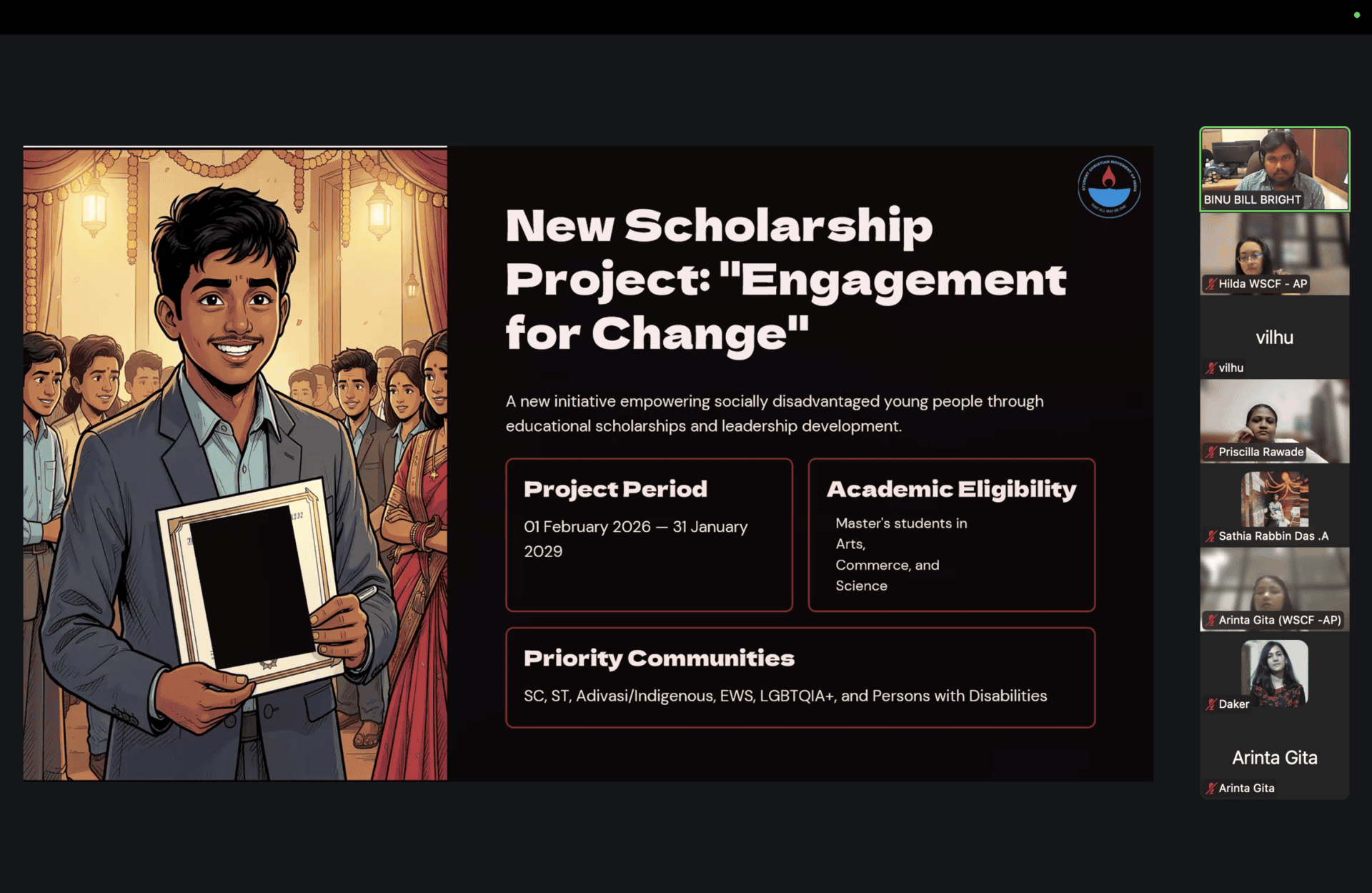
The meeting also showcased SCMI’s strong commitment to leadership formation. From human rights certificate courses and contextual Bible studies to scholarship initiatives for students from marginalized communities, theological fellowships, internships, and interfaith pilgrimages, the movement intentionally equips young people to connect faith with public life. Particular attention is given to supporting students from historically marginalized communities, including Scheduled Castes (SC) (eg. Dalit), Scheduled Tribe, Adivasi (Indigenous), economically disadvantaged, LGBTQIA+, and persons with disabilities., reflecting SCMI’s commitment to dignity, inclusion, and justice.
Participants further reflected on the changing realities of student engagement in the digital era. Recognizing that young people increasingly communicate through digital platforms, SCMI has expanded its advocacy through student-led short-form videos while also encouraging critical reflection on artificial intelligence, digital well-being, and the impact of social media on identity. Rather than viewing technology as a challenge alone, the movement seeks to engage it thoughtfully as a space for education, advocacy, and community-building.